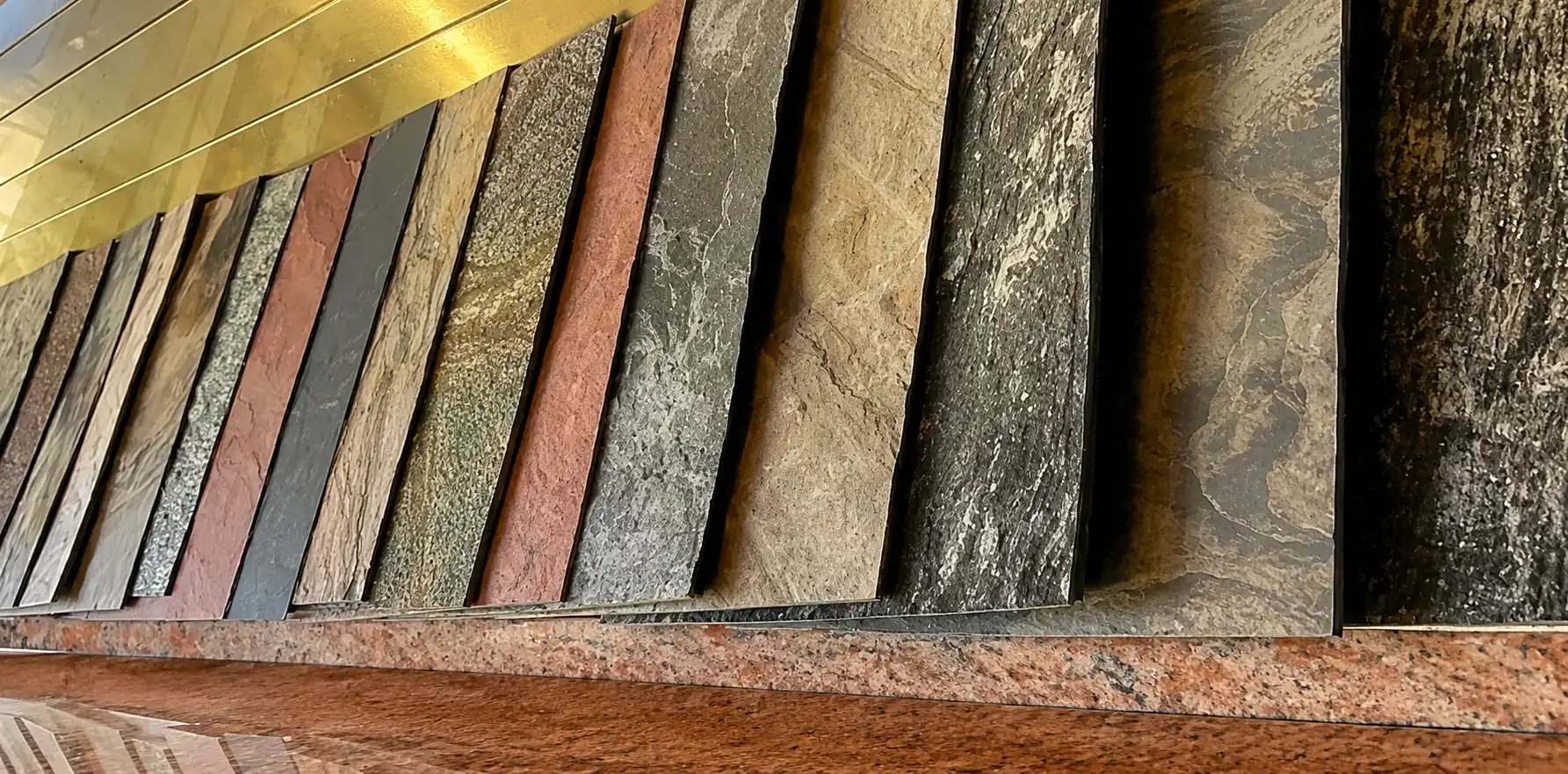
Natural stone has always been a preferred choice in architecture and interior design, and for good reason. Introduction of newer materials in the market has made designers and homeowners ask the same question: Is traditional stone still worth it, or does natural stone veneer make more sense today? Understanding what is natural stone veneer and how it compares to full-thickness stone is the first step towards making the right decision for any project.
What Is Natural Stone Veneer?
For those who are curious about what is natural stone veneer, it is a real stone whose thickness is reduced to around 2 to 3mm through an ultra-thin peeling process. An extra layer is added to give it strength, and the result is a sheet of natural stone that weighs a fraction of what a conventional slab does. It looks similar to a full-thickness stone because of the use of the same material.
Stone Veneer vs Real Stone Cost: What Is The Difference?
Budget is one of the most important things to consider when deciding between the two. There is a big difference in stone veneer vs real stone costs. The stone slabs are full thickness and costly to ship and install. They need structural reinforcement and skilled labor, and both are in the final bill. Stone veneer is lighter, easier to handle, and can be cut on site using standard tools. This provides some relief in the material and installation costs. For projects that are working within a set budget, the stone vs real stone cost comparison almost always favours veneer.
Traditional Stone Designs: Can Veneer Replicate Them?
One of the concerns with stone veneer is whether it looks and acts like traditional stone. The answer is yes, and in some cases it goes further.
- Slate: Slate is a favorite for traditional stone design and is used both indoors and outdoor.
- Sandstone: Warmer tones, softer grain. Good for residential with traditional stone designs.
- Marble: Smart and chic in veneer with none of the weight or structural demands of a full slab.
- Limestone: A classic material for feature walls, now accessible in a much lighter format.
Each of these is available as a veneer, and because the surface is real stone, the texture, grain, and variation that define traditional stone designs are fully preserved.
Practical Advantages of Natural Stone Veneer
Besides cost, natural stone veneer offers many benefits that full thickness stone cannot.
- Weighs around 2 to 3 kg per square metre.
- Suitable for curved surfaces, columns, arches and irregular shapes.
- Works for both indoor and outdoor applications.
- Tested for water resistance, UV stability, and fire retardancy.
- Can be cut on site with specialist equipment.
Where Does Stone Veneer Work Best?
Stone veneer is very flexible and versatile. It has been used on feature walls, bathroom surfaces, kitchen splashbacks, facades, curved reception counters, furniture panels, and suspended ceilings. Hospitality projects prefer stone veneer the most as it delivers a premium finish without the structural planning that is required in traditional stone.
When Does Traditional Stone Still Make Sense?
There are many situations where full thickness stone is the right choice. Traditional stone has a role in places like load bearing walls in heritage buildings, flooring in high traffic commercial spaces, and certain outdoor paving applications where their depth and density is required.
Conclusion
The quality of the stone depends heavily on how it is produced and where the source material comes from. Working with the best stone veneer company available makes a huge difference to the finished result. Natural stone veneer works as a flexible alternative for traditional stone for most designs. However, traditional stone is still demanded for load- bearing walls and high traffic areas.