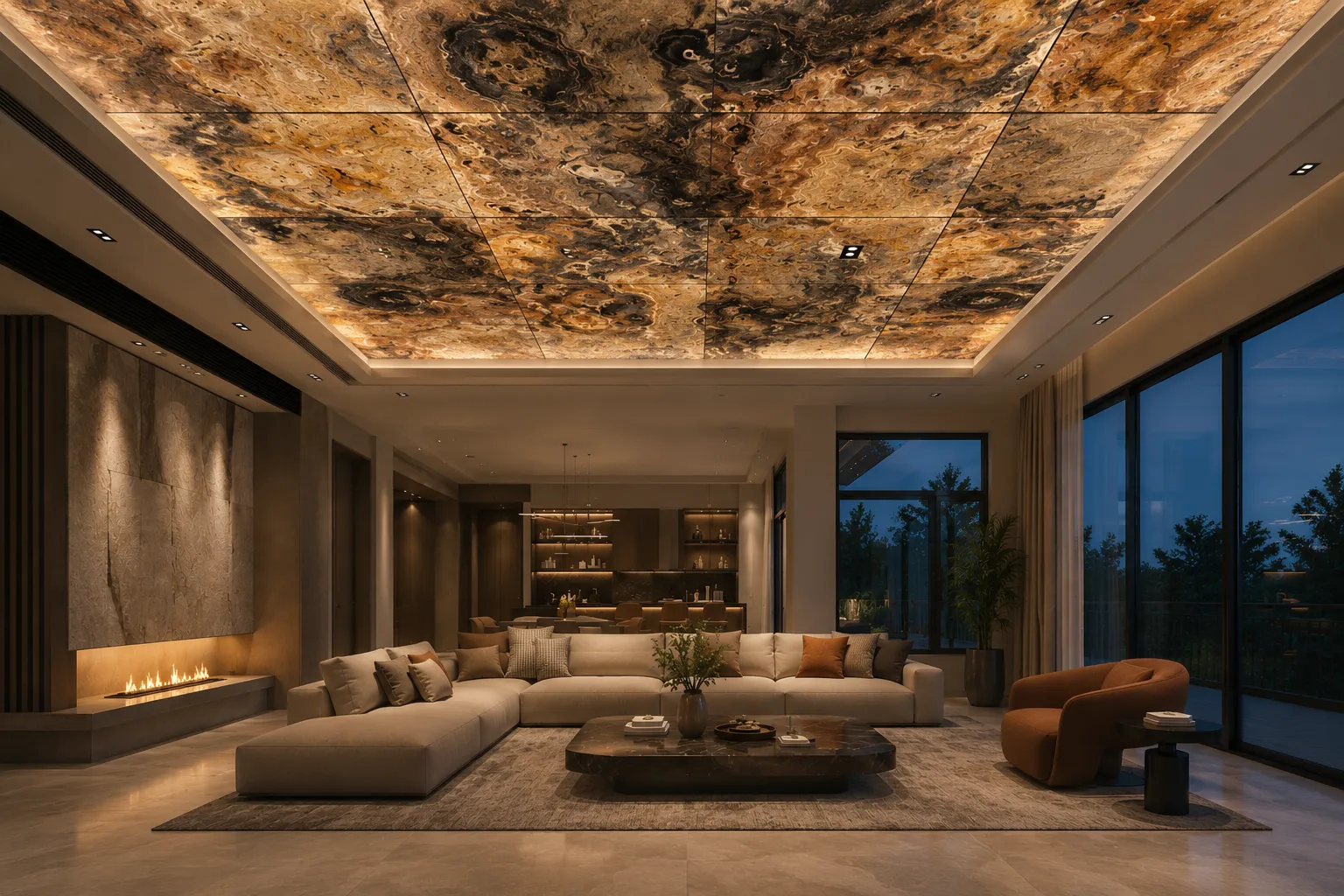
Stone has always felt heavy and solid. But translucent stone veneer is different. It's a thin slice of natural stone with a flexible backing, and light can actually pass through it. When you place a light source behind it, the stone starts to glow. That is something a regular stone can never do. This is why more designers are now using it on feature walls, partitions, and other spaces where lighting plays a big role in the design.
What Makes It Different?
Regular stone slabs are cut thick, so they stay solid and opaque. Light just sits on top of them; it doesn't pass through. Translucent stone is cut much thinner. This allows light to pass through the stone's natural veins and minerals. It doesn't just light up, it actually glows from within. That is why it works so well in places like hotel lobbies, reception areas, and homes where accent lighting is already part of the plan.
Translucent Stone Veneer Types
Understanding the main translucent stone veneer types helps with planning:
-
Onyx-based veneer- strong veining, pronounced light diffusion.
-
Marble based veneer- more uniform and softer light transmission.
-
Quartzite-based veneer- more durable, subtler translucency.
Since these translucent stone veneer types behave differently in different lighting conditions, reviewing a sample panel before ordering is worthwhile.
Translucent Stone Veneer Benefits
There are several translucent stone veneer benefits worth knowing about:
-
A lighter weight than solid stone slabs making it easier to handle and move around.
-
Flexibility that allows it to fit on vertical surfaces.
-
A special glowing look that changes depending on the lighting placed behind it.
These translucent stone veneer benefits make it a good option where designers want the look of stone, without the heavy weight of a full slab.
Choosing the Right Panel
Knowing how to choose translucent stone veneer begins by looking at the place where it will be installed. A few key things to consider are:
-
The thickness of the panel affects how much light can pass through.
-
The lighting source behind the panel matters since brightness and colour change the way it looks.
-
Whether the stone type suits the surface you have in mind.
-
Sourcing from a reliable, flexible stone veneer supplier who can confirm consistent quality.
Once you cover these points, how to choose translucent stone veneer for a specific room gets a lot easier.
The Installation Process
Getting how to install translucent stone veneer right starts with the surface. The wall needs to be clean, flat, and sturdy before you begin. Installers use an adhesive compatible with the flexible backing and handle the panels carefully to prevent cracking. The backlighting usually goes in before the panel is fixed, so the glow can be checked as you go. So, how to install translucent stone veneer well really comes down to following the supplier's own instructions, not just a generic process.
Where Can It Be Used?
You'll usually see it on feature walls, reception counters, and bar fronts. It also works on partitions, and sometimes on ceilings or countertops, wherever backlighting is part of the plan.
Conclusion
This is a solid choice for interiors built around lighting. Pick the right panel, get it installed properly, and you end up with the look of natural stone and a glow that plain stone just can't give you. That is really what makes it worth considering for a backlit space.